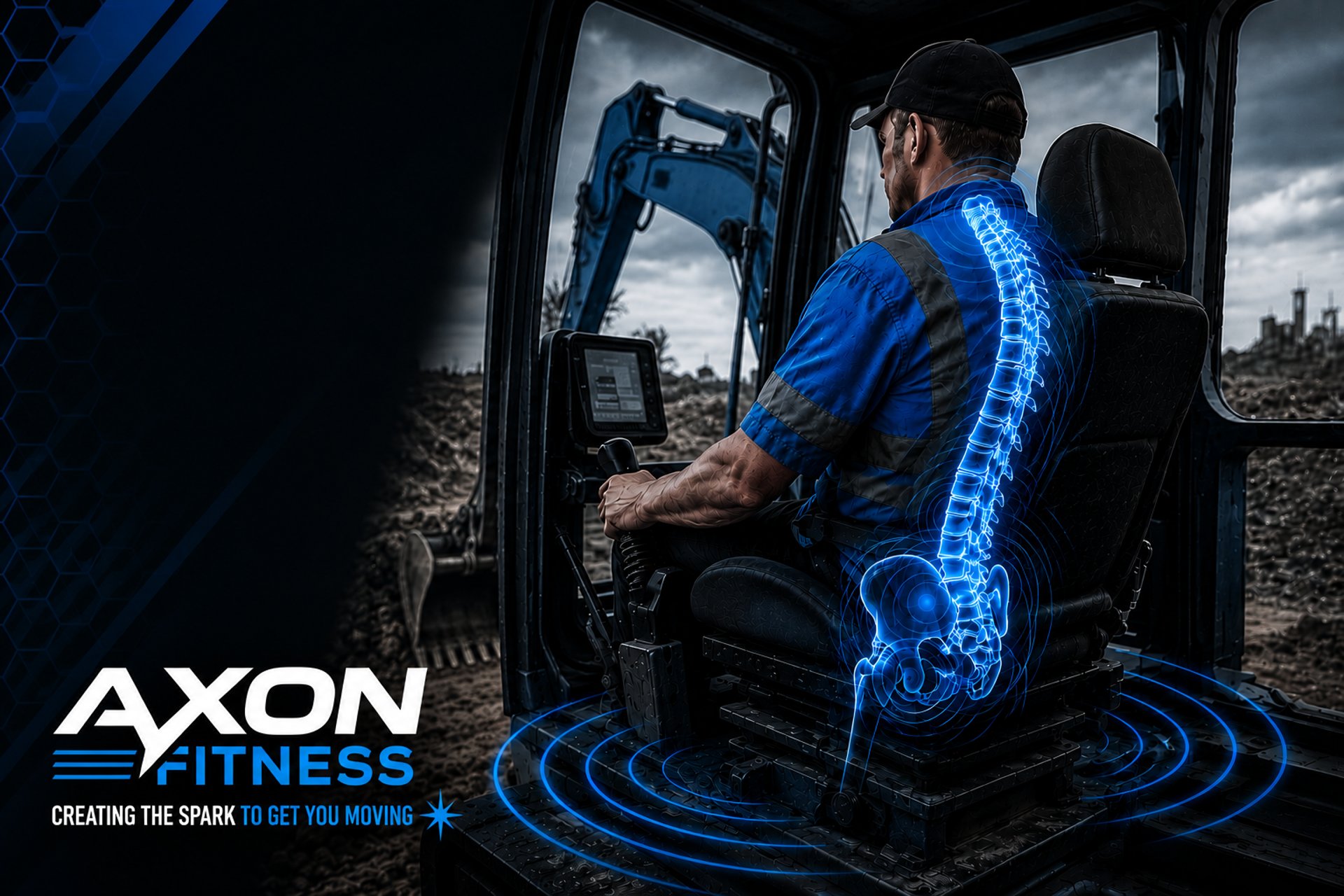
How Cab Vibration Affects Your Body Over Time
Discover how cab vibration affects machine operators over time, contributing to stiffness, back pain, fatigue, and reduced mobility—and what you can do about it.
Stewart | Axon Fitness
5/29/20263 min read
How Cab Vibration Affects Your Body Over Time
Most people think machine driving is easy on the body because you’re sitting down all day.
But speak to experienced excavator drivers, dumper drivers, plant operators, or long-term machine operators, and you’ll hear the same things repeated over and over:
stiff hips
tight lower backs
neck tension
aching shoulders
heavy legs
fatigue that feels deeper than it should
And one of the biggest reasons rarely gets talked about properly.
Constant vibration.
Your Body Was Never Designed for Continuous Vibration
Every day in machinery, your body absorbs thousands of small vibrations through the seat, floor, controls, and cab itself.
You may not consciously notice it after years on the machines because it becomes normal.
But your nervous system, joints, muscles, and spine still absorb the load.
Research into whole-body vibration exposure has linked long-term machine operation with increased rates of:
lower back pain
spinal compression
fatigue
neck and shoulder discomfort
circulation problems
musculoskeletal wear and tear
According to the UK Health and Safety Executive (HSE), prolonged exposure to whole-body vibration can contribute to back pain and other health problems over time.
Research:
Why Machine Operators Often Feel More Tired Than They Should
A lot of machine operators finish the day confused about why they feel exhausted when they haven’t been lifting or digging manually all day.
But fatigue is not just about movement.
Concentration, posture, restricted movement, vibration exposure, and low-level muscular tension all add up.
Your body is constantly stabilising itself, even while sitting.
Over time, this creates chronic tightness through:
the hips
lower back
upper traps
neck
shoulders
Many operators also develop shallow breathing patterns without realising it, especially during long periods of concentration.
Vibration Plus Sitting Is a Bad Combination
Sitting itself already reduces movement through the hips and spine.
Add vibration to the equation, and the body becomes even more compressed and restricted over time.
This is one reason many machine drivers start noticing:
difficulty getting out of the cab
stiff hips after work
reduced rotation
tight hamstrings
lower back pressure
swollen or heavy legs
The body slowly adapts to the position and environment it spends most time in.
That adaptation is not always positive.
The Problems Usually Build Slowly
Most experienced machine operators do not suddenly “break down.”
It builds gradually over years.
At first:
you just feel stiff occasionally
Then:
recovery takes longer
movement becomes more restricted
small aches become constant
fatigue builds quicker
mobility starts disappearing
Many men ignore it because it becomes part of normal working life.
But the body keeps score.
What Actually Helps
You do not need to live in the gym to reduce the effects of machine work.
Small consistent habits matter more.
The biggest improvements usually come from:
improving hip mobility
strengthening the core and glutes
walking more outside working hours
improving hydration
breaking up sitting time where possible
improving circulation
basic strength training
better recovery habits
Even 5–10 minutes of movement daily can make a noticeable difference over time.
If you struggle with stiffness after long hours operating machinery, you may also find these useful:
Why Your Legs Feel Heavy and Swollen After a Day in the Cab
Stretches for Machine Operators: Reduce Stiffness and Back Pain in the Cab
Final Thoughts
Machine operating is skilled work.
But long hours sitting in vibration, restricted positions, and constant concentration place more stress on the body than many people realise.
The earlier you start looking after mobility, recovery, strength, and circulation, the easier it is to stay capable long term.
Because staying physically capable is not just about work.
It affects:
independence
confidence
energy
long-term quality of life
About the Author
Stewart is the founder of Axon Fitness and has spent over 40 years working in construction, including machine driving, tiling, demolition, and refurbishment work.
Alongside decades on site, he also worked as a personal trainer and now focuses on helping machine operators, tradesmen, and over-40s stay strong, mobile, and capable for the long haul.
Want to Move Better and Feel Less Broken After Work?
Visit www.axon.fitness for practical fitness, mobility, and recovery guidance built around real working life — not influencer fitness culture.