Why Your Back Pain Might Be a Hydration Problem
Dehydrated spinal discs are a hidden cause of back pain in men over 40. Find out what's really going on and what you can do about it today.
stewart howard
4/30/20264 min read
Why Your Back Pain Might Be a Hydration Problem
Most men over 40 who come to me with back pain have already tried the usual fixes. They've stretched. They've taken ibuprofen. Some have even bought a new mattress. And still, the lower back tightens up every morning and nags them through the day.
What almost none of them have tried? Drinking more water.
Not because they're lazy. Because nobody told them that dehydration and back pain are directly connected - and that the connection starts in your spine.
Your Spinal Discs Are Mostly Water
Between every vertebra in your spine sits a disc. Its job is to absorb shock, create space, and allow you to bend and twist without bone grinding on bone.
Those discs are made up of roughly 80% water when you're young. That percentage drops as you get older - and it drops faster if you're chronically under-hydrated.
Each disc has a tough outer shell (the annulus fibrosus) and a soft, gel-like centre (the nucleus pulposus). That gel centre is where the water lives. When it's full, the disc does its job. It cushions, it creates space, it keeps the vertebrae apart.
When it dries out? The disc thins. The gap narrows. Vertebrae start pressing against nerves. That's when you get the ache, the stiffness, the shooting pain down the leg.
The Problem Gets Worse If You Sit All Day
Here's what most people don't realise: your spinal discs lose water throughout the day just through normal movement and gravity. That's expected. The body rehydrates them overnight when you're lying down and the pressure is off the spine.
But if you're sitting for 8–10 hours - at a desk, in a vehicle, in the cab - that compression is relentless. The discs are being squeezed for hours on end, losing fluid faster than they can recover. If you're not drinking enough water on top of that, the overnight rehydration cycle can't keep up.
If you're a machine operator spending 8–10 hours in the cab, this compounds fast - [here's what long hours in the cab are doing to your body](https://www.axon.fitness/10-hours-in-the-cab-what-its-doing-to-your-body).
Over time, this isn't just discomfort. Thinned, dehydrated discs lead to:
- Reduced range of motion (why you feel stiff getting up in the morning)
- Increased risk of disc bulges and herniations
- Nerve compression and referred pain down the legs
- Accelerated disc degeneration - a process that's hard to reverse
This is a slow build. You don't feel it happening. You just notice one day that your back is constantly sore and your mobility isn't what it was.
Most Men Over 40 Are Already Dehydrated - and Don't Know It
Here's a number worth knowing: by the time you feel thirsty, you're already 1–2% dehydrated. That might sound small, but research shows that level of dehydration is enough to affect muscle function, cognitive performance, and yes - spinal disc health.
Men over 40 are especially at risk because the thirst mechanism becomes less reliable with age. Your body gets worse at signalling that it needs water. You stop noticing until things are already worse than they should be.
Common signs of chronic mild dehydration that get written off as "just getting older":
- Stiff joints in the morning
- Low-grade lower back ache
- Fatigue that doesn't resolve with sleep
- Brain fog and difficulty concentrating
- Dark yellow urine (pale straw colour is what you're aiming for)
Sound familiar?
What Good Hydration Actually Looks Like
Before I give you numbers, one thing to know: coffee, tea, and soft drinks don't count the same way water does. Caffeine is a mild diuretic - it makes you lose water. If your "hydration" is mostly coffee throughout the day, you may actually be making things worse.
A rough guide for men over 40:
- Baseline: 2–2.5 litres of water per day as a starting point
- If you're active or training: add 500ml–1 litre on top of that
- Timing: spread it through the day - don't try to catch up in the evening
- Morning: a large glass of water first thing helps replace what you lost overnight (your body loses water while you sleep)
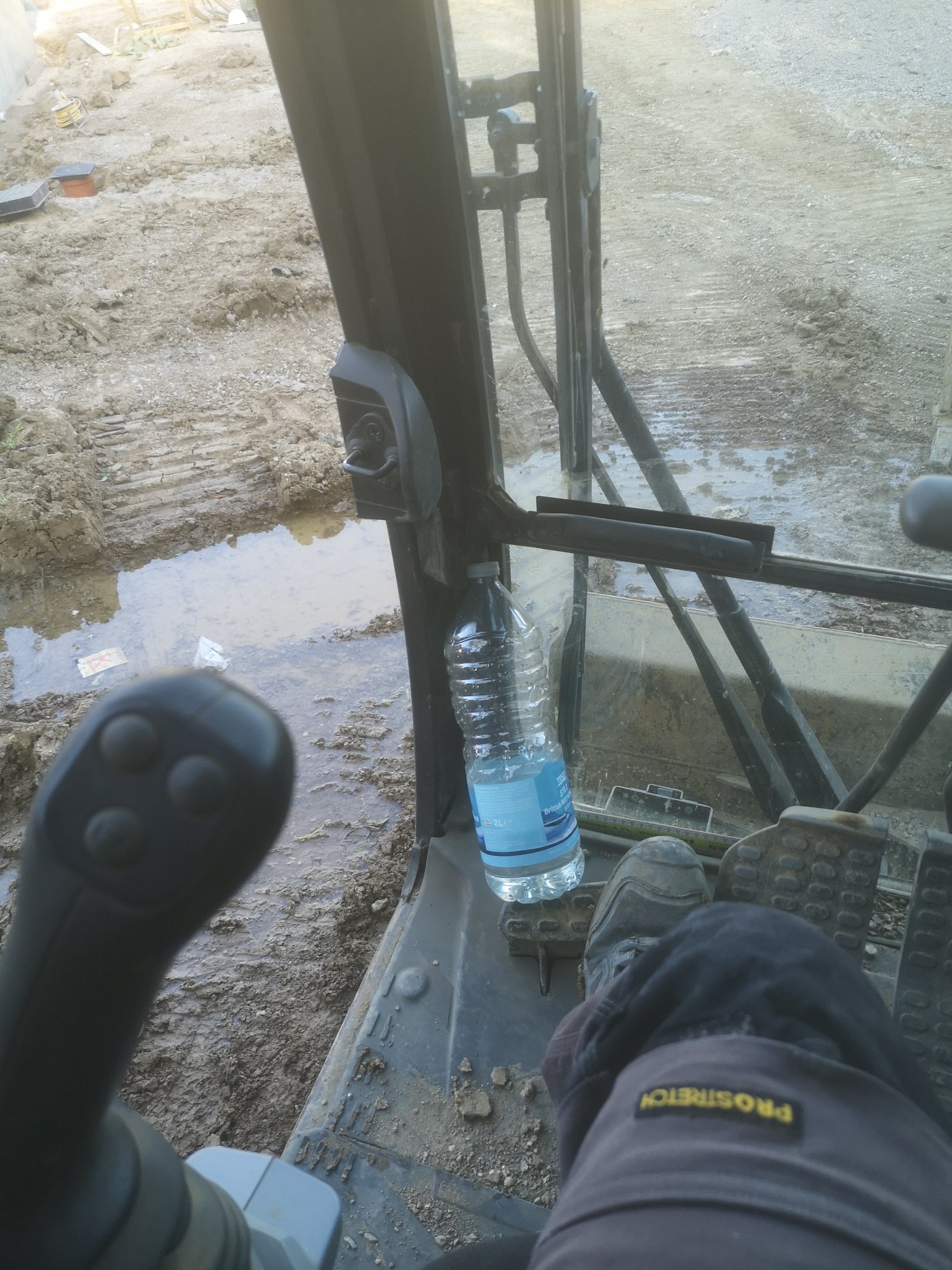
- On shift: if you're in the cab or at a desk all day, keep a water bottle where you can see it. Out of sight, out of mind.
One practical marker: your urine should be pale straw coloured. Dark yellow means you're behind. Clear means you've overcorrected. Pale straw is the target.
Hydration Alone Won't Fix a Structural Problem
I want to be straight with you here. If you've got a genuine disc herniation or nerve compression issue, drinking more water isn't going to fix it overnight. Dehydrated discs that have thinned over years don't fully reverse - that's just the reality.
But proper hydration can:
- Slow the rate of further degeneration
- Reduce the inflammation and sensitivity around the discs
- Improve how your muscles support the spine (dehydrated muscles fatigue faster and provide less spinal stability)
- Make a meaningful difference to how you feel day to day
It's not a miracle. But it's one of the simplest, cheapest things you can do - and almost nobody is actually doing it consistently.
This Is Why Coaching Looks at the Full Picture
When I work with men over 40, we don't just talk about what they're doing in training. We look at everything that's affecting how the body functions - including sleep, stress, nutrition, and yes, hydration.
Because you can do all the right exercises and still feel terrible if the basics aren't in place. The spine needs structure, movement, and fluid to work properly. All three matter.
If you're dealing with persistent back pain and you want to understand what's actually going on - and what to do about it - I'd like to help.
Message me on WhatsApp and let's have a conversation about where you're at and what's realistic for you.
[WhatsApp Axon Fitness](00447848874224)
About the Author
I've spent 40+ years working in construction and professional fitness training. I know what it does to your body because I've lived it. Axon Fitness exists to help machine operators and men over 40 stay strong, mobile, and capable.