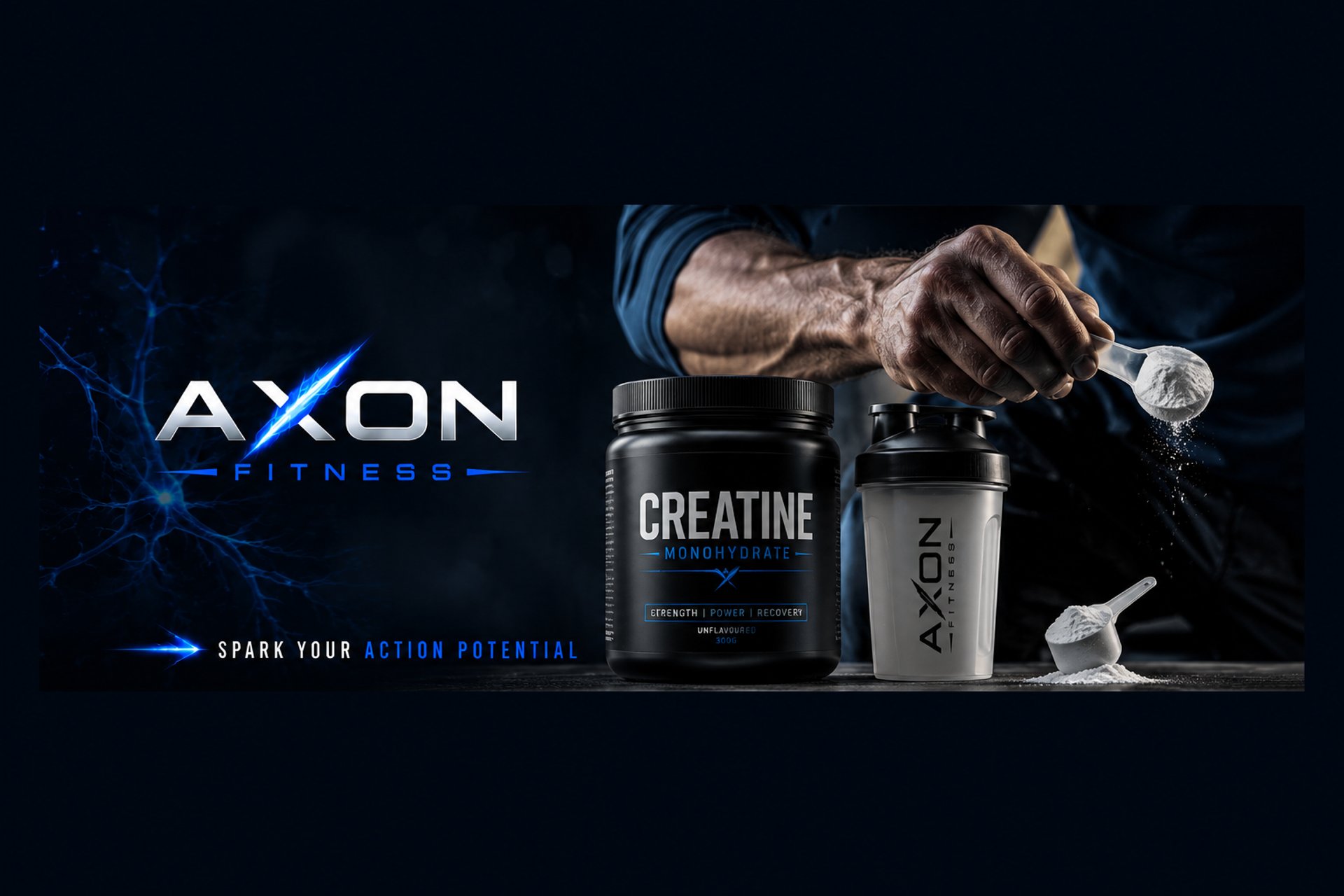
Why Every Machine Operator Over 40 Should Know About Creatine
stewart howard
6/18/20263 min read
Why Every Machine Operator Over 40 Should Know About Creatine
Mention creatine and most people immediately think of bodybuilders.
Big muscles.
Gym mirrors.
Protein shakers.
But that view is badly out of date.
Today, creatine is one of the most researched supplements available, and the people who may benefit most aren't necessarily young bodybuilders.
They may be machine operators, tradesmen and adults over 40 who simply want to stay strong, capable and independent for as long as possible.
What Is Creatine?
Creatine is a natural compound found in your muscles and brain.
Your body produces some on its own, and you also get small amounts from foods such as meat and fish.
Its primary role is helping your body produce energy during short bursts of activity.
That could be:
Lifting a bag of cement.
Climbing in and out of a machine.
Carrying materials across site.
Strength training in the gym.
Creatine isn't a steroid.
It's one of the most heavily researched sports nutrition supplements ever studied.
Research review:
https://jissn.biomedcentral.com/articles/10.1186/s12970-017-0173-z
What Happens After 40?
One of the realities of ageing is that muscle mass gradually declines.
This process is known as sarcopenia.
Strength declines.
Recovery slows.
Physical tasks that once felt easy begin to feel harder.
This is one reason I wrote:
How to Get Fit After 40
https://www.axon.fitness/how-to-get-fit-after-40
The goal isn't to fight ageing.
The goal is to maintain as much strength, movement and physical capability as possible.
Why Creatine May Help Machine Operators
Most machine operators spend long hours sitting.
Even when you're working hard mentally, your muscles aren't receiving the same stimulus they would during regular strength training.
Over time this can contribute to reduced muscle mass and physical capacity.
Creatine may help support:
Muscle maintenance.
Strength development.
Training performance.
Recovery from exercise.
Research suggests creatine supplementation combined with resistance training can help older adults improve strength and lean muscle mass.
https://pubmed.ncbi.nlm.nih.gov/28615996/
This doesn't mean creatine does the work for you.
It means it may help support the work you're already doing.
It's Not Just About Muscle
One area that has attracted increasing attention is brain function.
Machine operators spend hours concentrating.
You're constantly:
Watching surroundings.
Monitoring machine movements.
Assessing risks.
Making decisions.
Emerging research suggests creatine may play a role in supporting cognitive performance, particularly during periods of mental fatigue and sleep deprivation.
Research review:
https://pmc.ncbi.nlm.nih.gov/articles/PMC7916590/
Scientists are still learning about these effects, but the findings are interesting.
Is Creatine Safe?
This is one of the most common questions people ask.
Creatine has been extensively studied over many years.
Current research indicates that creatine monohydrate is safe for healthy individuals when used as recommended.
Position stand:
https://jissn.biomedcentral.com/articles/10.1186/s12970-021-00412-w
If you have existing kidney disease or a medical condition, speak with your healthcare professional before taking any supplement.
What About Water Retention?
Some people worry that creatine causes excessive water retention.
In reality, creatine increases water stored within muscle tissue.
This is different from feeling bloated or retaining water under the skin.
For most people, any weight gain is relatively small and reflects increased water stored inside the muscle.
Do You Need a Loading Phase?
Many supplement companies recommend a loading phase.
In practice, most people don't need one.
A simple approach is:
3–5 grams of creatine monohydrate per day.
Take it consistently.
That's it.
No complicated protocol required.
The Real Reason I Take Creatine
At 60 years old, I'm not taking creatine because I want to become a bodybuilder.
I'm taking it because I want to maintain strength.
I want to maintain muscle.
I want to keep doing the things I enjoy.
And I want to stay physically capable for as long as possible.
For machine operators and tradesmen, that's often the real goal.
Not looking impressive.
Being able to keep moving, working and living independently.
Frequently Asked Questions
Is creatine only for bodybuilders?
No. Creatine is used by athletes, older adults and everyday people looking to support strength and physical performance.
What is the best type of creatine?
Creatine monohydrate is the most researched and cost-effective form.
How much creatine should I take?
Most research supports 3–5 grams per day.
Can adults over 40 take creatine?
Yes. In fact, many studies focus specifically on older adults because of its potential role in maintaining strength and muscle mass.
Do I need to cycle creatine?
Current evidence does not suggest that cycling is necessary for healthy individuals.
Final Thoughts
Most machine operators spend a lot of time thinking about maintaining their machinery.
Regular servicing prevents problems before they happen.
The same principle applies to your body.
Creatine isn't a miracle supplement.
It won't replace training, movement, sleep or good nutrition.
But it may be one useful tool that helps you maintain strength, muscle and physical capability as you get older.
For many machine operators over 40, that's a worthwhile investment.
If you'd like practical fitness advice designed specifically for machine operators and tradesmen, visit:
About the Author
Stewart Howard is the founder of Axon Fitness. With more than 40 years of experience in construction, machine operating and physical trades, he understands first-hand the wear and tear that demanding work places on the body. Through Axon Fitness, he helps machine operators, tradesmen and adults over 40 stay strong, mobile and capable for the long haul.