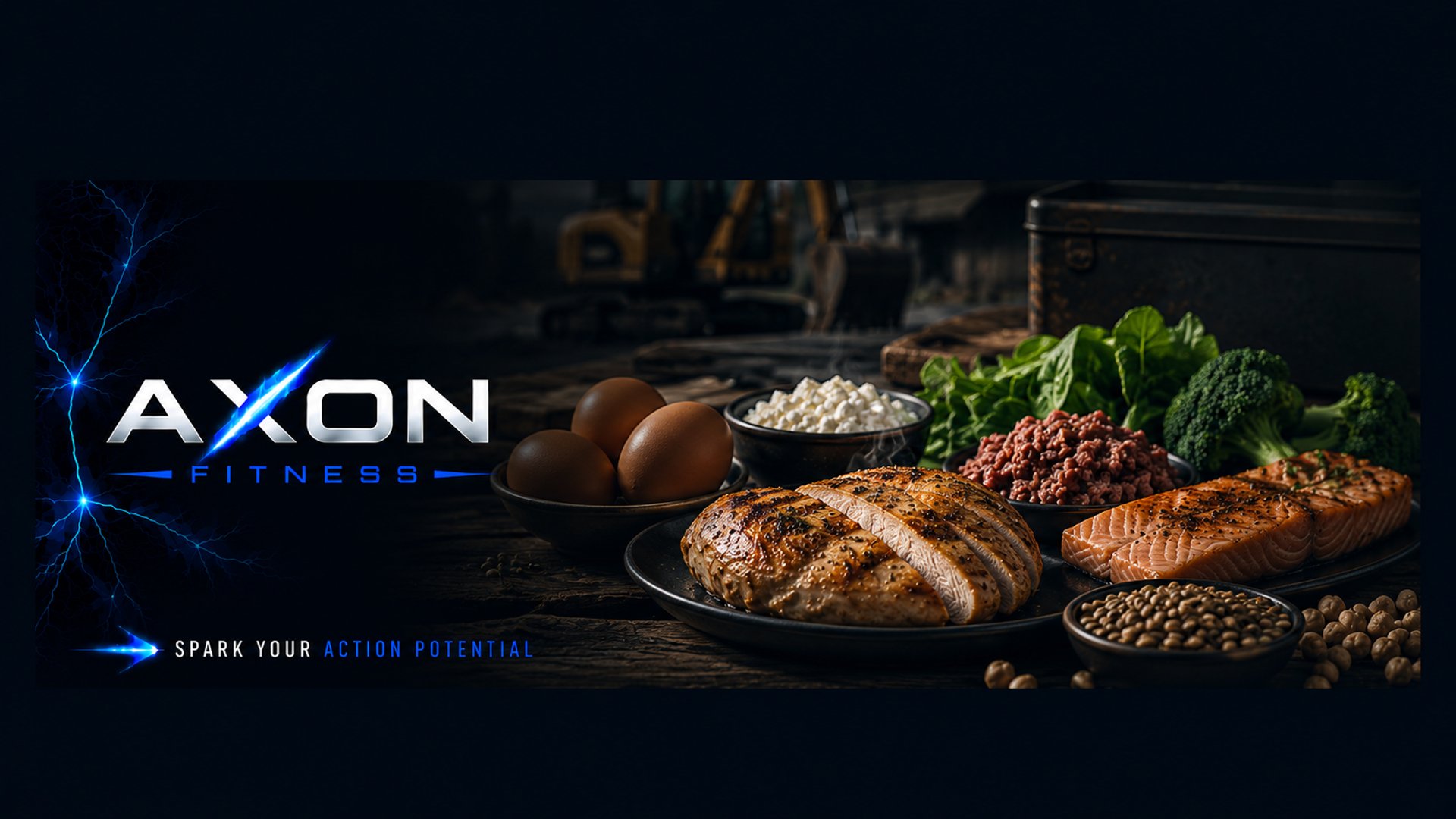
The Construction Industry's Protein Problem
stewart howard
6/19/20263 min read
The Construction Industry's Protein Problem
Most construction workers don't think they have a nutrition problem.
After all, they're eating.
Sometimes a lot.
A bacon roll on the way to site.
A meal deal at lunch.
A few biscuits with a brew.
Something quick when they get home.
The issue isn't always the amount of food being eaten.
The issue is whether that food is helping the body recover from years of physical work.
As we get older, that question becomes increasingly important.
Eating Plenty Doesn't Mean Eating Well
One of the biggest misconceptions in construction is:
"I work hard, so I can eat whatever I like."
To a point, that's true.
Physical work burns calories.
But recovery requires more than calories.
It requires nutrients.
And one of the most important nutrients for maintaining strength and physical capability is protein.
Why This Matters More After 40
As we age, we naturally begin to lose muscle mass.
This process starts earlier than many people realise.
Research has shown that age-related muscle loss can begin long before retirement age.
If you're interested in staying capable as you get older, you may also find this article useful:
How to Get Fit After 40
https://www.axon.fitness/how-to-get-fit-after-40
The goal isn't becoming a bodybuilder.
The goal is maintaining enough strength and muscle to keep doing the things you want to do.
Working Hard Doesn't Protect You
Many workers assume that because their job is physical, muscle loss won't affect them.
Unfortunately, that's not always true.
I've written before about how physical work and fitness aren't necessarily the same thing.
Why Working Hard Isn't the Same as Staying Fit
https://www.axon.fitness/why-working-hard-isnt-the-same-as-staying-fit
Physical work places demands on the body.
But it doesn't automatically provide the strength training stimulus needed to maintain muscle long-term.
Nor does it guarantee you're eating in a way that supports recovery.
The Typical Site Diet
Walk onto most sites and you'll see some familiar choices.
Bacon rolls
Sausage sandwiches
Crisps
Chocolate bars
Energy drinks
Meal deals
Convenience foods
None of these foods are automatically bad.
The issue is when they become the foundation of your daily nutrition.
Many workers are consuming plenty of calories while still missing out on nutrients that support recovery and muscle maintenance.
Recovery Starts Long Before The Gym
Most people think recovery is something athletes worry about.
But if you're:
Operating machinery
Carrying materials
Working long shifts
Driving long distances
Spending years on site
Then recovery matters to you as well.
Recovery isn't just about feeling less tired.
It's about maintaining the physical capacity to keep doing your job and enjoying life outside work.
The Link Between Protein And Recovery
Protein provides the building blocks your body uses to repair and maintain tissue.
This becomes increasingly important as we get older.
Research has consistently shown that adequate protein intake supports muscle maintenance and healthy ageing.
Research:
https://pmc.ncbi.nlm.nih.gov/articles/PMC6566799/
The exact amount varies from person to person.
Age.
Body weight.
Activity levels.
Goals.
All matter.
That's why individual recommendations are often more useful than generic formulas.
The Goal Isn't Bigger Muscles
This is where many people switch off.
They hear the word protein and immediately think:
"That's for gym lads."
The reality is very different.
For most machine operators and tradesmen, the goal isn't bigger muscles.
The goal is:
Staying strong.
Staying mobile.
Recovering better.
Remaining independent.
Continuing to do the things you enjoy.
Protein is simply one piece of that bigger picture.
Why Machine Operators Need To Pay Attention
Machine operators face a unique challenge.
Long periods sitting in the cab often mean lower levels of physical activity than many people assume.
At the same time, operators still need:
Strength
Stability
Concentration
Recovery
This is one reason I recently wrote:
Why Every Machine Operator Over 40 Should Know About Creatine
https://www.axon.fitness/why-every-machine-operator-over-40-should-know-about-creatine
Supporting muscle and recovery becomes increasingly important as the years go by.
Small Changes Make A Big Difference
Most people don't need a perfect diet.
They don't need to weigh every gram of food.
They don't need to live on protein shakes.
What they often need is greater awareness of how their food choices affect:
Recovery
Energy
Strength
Long-term health
Small improvements performed consistently tend to outperform short bursts of perfection.
Final Thoughts
The construction industry doesn't have a calorie problem.
It often has a recovery problem.
Many workers are eating enough food to get through the day.
But not necessarily eating in a way that supports long-term physical capability.
As we get older, maintaining strength becomes less about working harder and more about recovering smarter.
Protein is only one part of the equation.
But it's an important part that many workers overlook.
Frequently Asked Questions
Why does protein become more important with age?
As we get older, maintaining muscle mass becomes increasingly important for strength, mobility and independence.
Is protein only important if I go to the gym?
No. Protein supports the maintenance and repair of body tissues regardless of whether you train.
Can physical work replace strength training?
Physical work provides activity, but it doesn't always provide the same benefits as structured strength training.
Do machine operators need protein?
Like everyone else, machine operators need adequate nutrition to support recovery, health and physical capability.
Is eating more food the same as eating better?
Not necessarily. The quality and balance of your nutrition matters as much as the quantity.
About the Author
Stewart Howard is the founder of Axon Fitness. With more than 40 years of experience in construction, machine operating and physical trades, he understands first-hand the wear and tear that demanding work places on the body. Through Axon Fitness, he helps machine operators, tradesmen and adults over 40 stay strong, mobile and capable for the long haul.