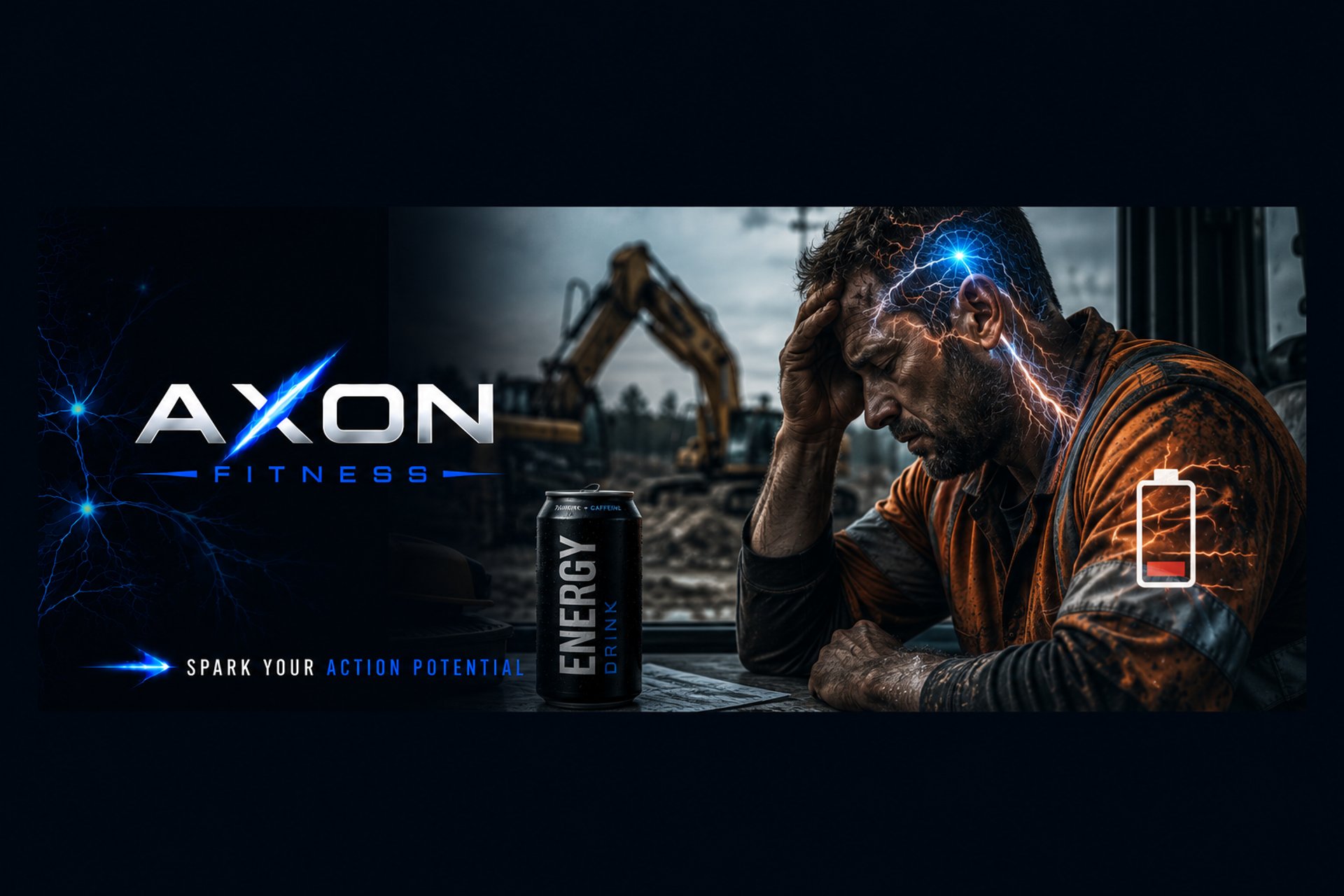
Why Energy Drinks Are Wrecking Your Afternoon
stewart howard
6/19/20264 min read
Why Energy Drinks Are Wrecking Your Afternoon
It's 5am.
The alarm goes off.
You've got a long commute ahead of you, a full shift on site and another busy day in the cab.
So you reach for an energy drink.
Or a strong coffee.
Or both.
The caffeine kicks in.
You feel more awake.
More alert.
More ready for the day.
The problem is that what helps at 5am may be causing problems at 3pm.
And even bigger problems at 10pm.
The Caffeine Rollercoaster
Most people use caffeine because they're tired.
That's understandable.
Machine operators and tradesmen often work long hours, start early and spend much of the day concentrating.
The issue isn't necessarily caffeine itself.
The issue is often the amount and timing.
Caffeine blocks adenosine, a chemical involved in promoting sleep and tiredness.
For a while, this can make you feel more alert.
But eventually the caffeine wears off.
And when it does, the fatigue that was temporarily hidden often returns.
Sometimes even stronger than before.
The result is another coffee.
Another energy drink.
And another cycle of stimulation.
Why The Afternoon Crash Happens
Many workers describe the same pattern.
Energy drink before work.
Coffee at break.
Another caffeine hit after lunch.
Energy crash by mid-afternoon.
The body hasn't suddenly run out of energy.
In many cases, you're simply experiencing the ups and downs of stimulant use combined with normal fatigue.
This can be particularly noticeable after poor sleep.
The Hidden Cost: Your Sleep
This is where things become important.
Many people think caffeine only affects them if it stops them falling asleep.
But that's only part of the story.
Research has shown that caffeine consumed even six hours before bedtime can reduce sleep duration and negatively affect sleep quality.
Research:
https://jcsm.aasm.org/doi/10.5664/jcsm.3170
The half-life of caffeine is roughly five to six hours for many adults.
That means a large coffee or energy drink consumed in the afternoon may still be affecting your body late into the evening.
Even if you fall asleep easily, sleep quality may be reduced.
Why Deep Sleep Matters
Deep sleep is where much of your recovery takes place.
During deep sleep, your body is involved in:
Physical recovery
Muscle repair
Hormone regulation
Memory consolidation
Cognitive recovery
Machine operators often focus on staying awake.
But recovery happens when you're asleep.
Poor sleep doesn't just make you tired.
It may affect:
Training progress
Physical recovery from work
Concentration
Decision-making
Mood
Long-term health
This is one reason why recovery deserves as much attention as training.
You Can't Out-Train Poor Sleep
Many people try to fix fatigue with more caffeine.
The problem is that poor sleep often creates the fatigue in the first place.
Then more caffeine affects sleep.
Which creates more fatigue.
Which leads to more caffeine.
It's a cycle that's easy to get stuck in.
What Changed When I Reduced My Caffeine Intake
For years I relied heavily on caffeine.
At one point I was drinking around five latte sachets a day.
Like many workers, I used caffeine to get through early starts, long commutes and busy days.
Over time I started paying more attention to my sleep.
These days I have no caffeine after 10am.
After that, I switch to decaf coffee for the rest of the day.
I still enjoy the taste.
I still enjoy the routine.
But I'm no longer loading my system with caffeine late into the afternoon.
One thing many people don't realise is that drinking coffee isn't always just about caffeine.
The smell.
The taste.
The habit.
The routine.
These all become part of the experience.
Research suggests that expectations around caffeine can influence how alert people feel.
Research:
https://pmc.ncbi.nlm.nih.gov/articles/PMC5614578/
Decaf doesn't provide the same stimulant effect, but many people find it satisfies the habit surprisingly well.
For me, reducing caffeine and switching to decaf later in the day has helped improve sleep quality.
And better sleep means better recovery.
What About Hydration?
Many people replace water with energy drinks, coffee and highly caffeinated beverages.
While coffee still contributes to fluid intake, caffeine can have a mild diuretic effect.
For most healthy adults, this isn't a major problem.
However, relying heavily on caffeinated drinks often means people neglect basic hydration habits.
If you're interested in hydration, you may also find this article useful:
Why Your Back Pain Might Be a Hydration Problem
https://www.axon.fitness/why-your-back-pain-might-be-a-hydration-problem
Better Alternatives To Energy Drinks
The goal isn't necessarily zero caffeine.
The goal is smarter caffeine use.
1. Earlier Caffeine
Many people benefit from limiting caffeine to the morning hours.
2. Decaf Later In The Day
You still get the taste and routine without continually adding caffeine.
3. Better Hydration
Water remains one of the simplest ways to support energy and concentration.
4. Protein At Breakfast
Protein helps provide more stable energy compared with relying entirely on caffeine.
5. Improve Sleep
The most powerful energy supplement available is often better sleep.
Why This Matters For Machine Operators
Operating machinery isn't a sprint.
It's sustained concentration.
You're making decisions all day.
Watching your surroundings.
Managing risks.
Maintaining focus.
For that reason, steady energy is often more useful than repeated spikes and crashes.
This is also why recovery matters.
If you've read my article on creatine, you'll know that staying capable for the long haul is about more than simply getting through today's shift.
Why Every Machine Operator Over 40 Should Know About Creatine
https://www.axon.fitness/why-every-machine-operator-over-40-should-know-about-creatine
You may also find these useful:
How to Get Fit After 40
https://www.axon.fitness/how-to-get-fit-after-40
Why Working Hard Isn't the Same as Staying Fit
https://www.axon.fitness/why-working-hard-isnt-the-same-as-staying-fit
Final Thoughts
Most people use caffeine because they're tired.
The problem is that excessive caffeine later in the day may contribute to poorer sleep.
Poor sleep then leaves you more tired the next morning.
The result is a cycle that can continue for years.
For me, one of the biggest improvements came from keeping caffeine to the morning and switching to decaf after 10am.
It wasn't complicated.
But it helped improve sleep quality and recovery.
And recovery is what allows you to keep performing, training and working for the long haul.
Frequently Asked Questions
Are energy drinks bad for machine operators?
Not necessarily. The issue is often the amount consumed and the timing.
How much caffeine is too much?
Many health authorities suggest keeping caffeine intake below 400mg per day for most healthy adults.
Can caffeine affect deep sleep?
Yes. Research suggests caffeine consumed later in the day may reduce sleep quality and duration.
Is decaf coffee worth drinking?
Many people find decaf allows them to enjoy the taste and routine of coffee while reducing overall caffeine intake.
Why do I crash in the afternoon?
Potential causes include poor sleep, excessive caffeine use, inadequate nutrition and dehydration.
About the Author
Stewart Howard is the founder of Axon Fitness. With more than 40 years of experience in construction, machine operating and physical trades, he understands first-hand the wear and tear that demanding work places on the body. Through Axon Fitness, he helps machine operators, tradesmen and adults over 40 stay strong, mobile and capable for the long haul.